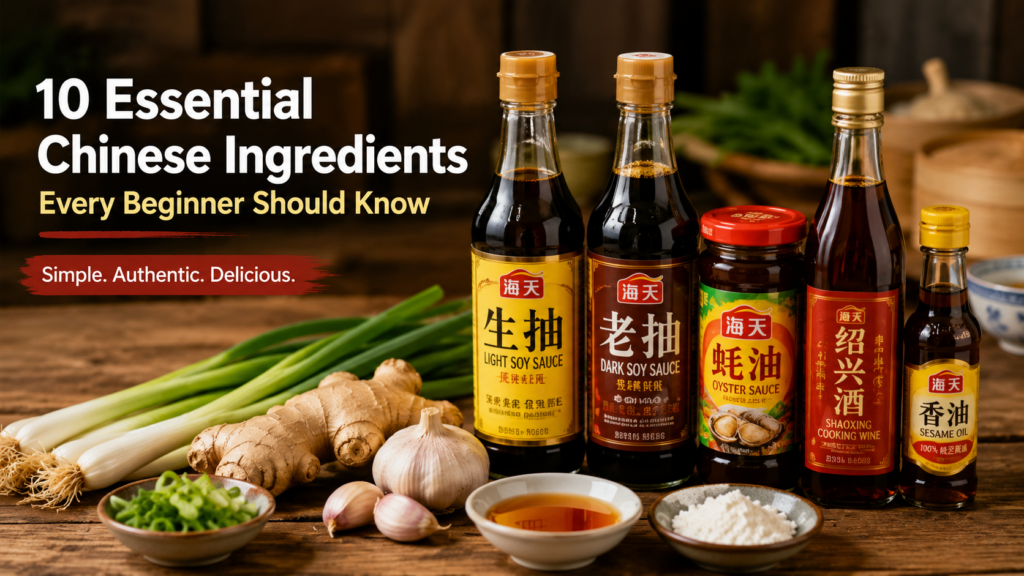
If you’re new to Chinese cooking, stocking your pantry with the right ingredients is the first step toward making authentic and delicious dishes at home. While Chinese cuisine may seem complex, many recipes rely on a small group of versatile ingredients that can be used in dozens of dishes. In this guide, you’ll learn the 10 essential Chinese ingredients every beginner should know.
Why These Ingredients Matter
Chinese cooking is all about balancing flavors. The right combination of savory, sweet, salty, and aromatic ingredients creates the distinctive taste found in Chinese dishes.
Having these pantry staples on hand will help you cook popular recipes such as:
- Kung Pao Chicken
- Egg Fried Rice
- Tomato and Egg Stir-Fry
- Beef with Broccoli
- Lo Mein Noodles
- Garlic Green Beans
Let’s explore the ingredients you’ll use most often.
1. Light Soy Sauce (生抽)
Light soy sauce is one of the most important ingredients in Chinese cooking.
What it does:
- Adds saltiness and umami flavor
- Used in marinades, stir-fries, and dipping sauces
Best uses:
- Fried rice
- Chicken marinades
- Vegetable stir-fries
Beginner tip:
Choose naturally brewed soy sauce whenever possible for a richer flavor.
2. Dark Soy Sauce (老抽)
Dark soy sauce is thicker, darker, and slightly sweeter than light soy sauce.
What it does:
- Adds color to dishes
- Provides mild sweetness
Best uses:
- Braised pork
- Red-cooked dishes
- Noodle recipes
Beginner tip:
Use sparingly. A little goes a long way.
3. Oyster Sauce (蚝油)
Despite its name, oyster sauce doesn’t taste fishy.
What it does:
- Adds rich umami flavor
- Enhances meat and vegetables
Best uses:
- Beef with broccoli
- Stir-fried vegetables
- Noodle dishes
Beginner tip:
Keep a bottle in the refrigerator after opening.
4. Shaoxing Wine (绍兴酒)
Shaoxing wine is a traditional Chinese cooking wine.
What it does:
- Removes unwanted meat odors
- Adds depth and aroma
Best uses:
- Marinades
- Stir-fries
- Braised dishes
Beginner tip:
If unavailable, dry sherry is a reasonable substitute.
5. Sesame Oil (香油)
Sesame oil has a strong nutty aroma.
What it does:
- Adds fragrance
- Finishes dishes with authentic flavor
Best uses:
- Soups
- Dumpling sauces
- Cold dishes
Beginner tip:
Add at the end of cooking, not during high-heat frying.
6. Rice Vinegar (米醋)
Rice vinegar provides a mild acidity compared to Western vinegar.
What it does:
- Balances flavors
- Adds brightness
Best uses:
- Sweet and sour dishes
- Salad dressings
- Dipping sauces
Beginner tip:
White rice vinegar is the most versatile choice.
7. Cornstarch (玉米淀粉)
Cornstarch is commonly used in Chinese kitchens.
What it does:
- Tenderizes meat
- Thickens sauces
Best uses:
- Chicken marinades
- Stir-fry sauces
- Soups
Beginner tip:
Mix with cold water before adding to hot dishes.
8. Ginger (姜)
Fresh ginger is a fundamental aromatic ingredient.
What it does:
- Adds warmth and freshness
- Removes unpleasant odors from meat and seafood
Best uses:
- Stir-fries
- Soups
- Marinades
Beginner tip:
Store ginger in the freezer for longer shelf life.
9. Garlic (蒜)
Garlic is used in countless Chinese recipes.
What it does:
- Adds aroma and depth
- Enhances savory flavors
Best uses:
- Stir-fried vegetables
- Noodles
- Meat dishes
Beginner tip:
Fresh garlic always tastes better than garlic powder.
10. Green Onions (葱)
Green onions are one of the most commonly used fresh ingredients in Chinese cooking.
What they do:
- Add freshness and color
- Provide a mild onion flavor
Best uses:
- Garnishing dishes
- Stir-fries
- Soups
Beginner tip:
Use both the white and green parts for maximum flavor.
Essential Chinese Pantry Checklist
If you’re just getting started, buy these ingredients first:
✅ Light Soy Sauce
✅ Dark Soy Sauce
✅ Oyster Sauce
✅ Shaoxing Wine
✅ Sesame Oil
✅ Rice Vinegar
✅ Cornstarch
✅ Ginger
✅ Garlic
✅ Green Onions
With these ten ingredients, you’ll be able to cook dozens of authentic Chinese dishes at home.
Final Thoughts
Learning Chinese cooking doesn’t require a huge pantry. By stocking these 10 essential ingredients, you’ll have everything you need to start making flavorful stir-fries, noodle dishes, fried rice, and many other classic recipes.
As you gain confidence, you can gradually add more specialty ingredients to expand your Chinese cooking skills.
Which Chinese ingredient do you use most often? Let us know in the comments below!