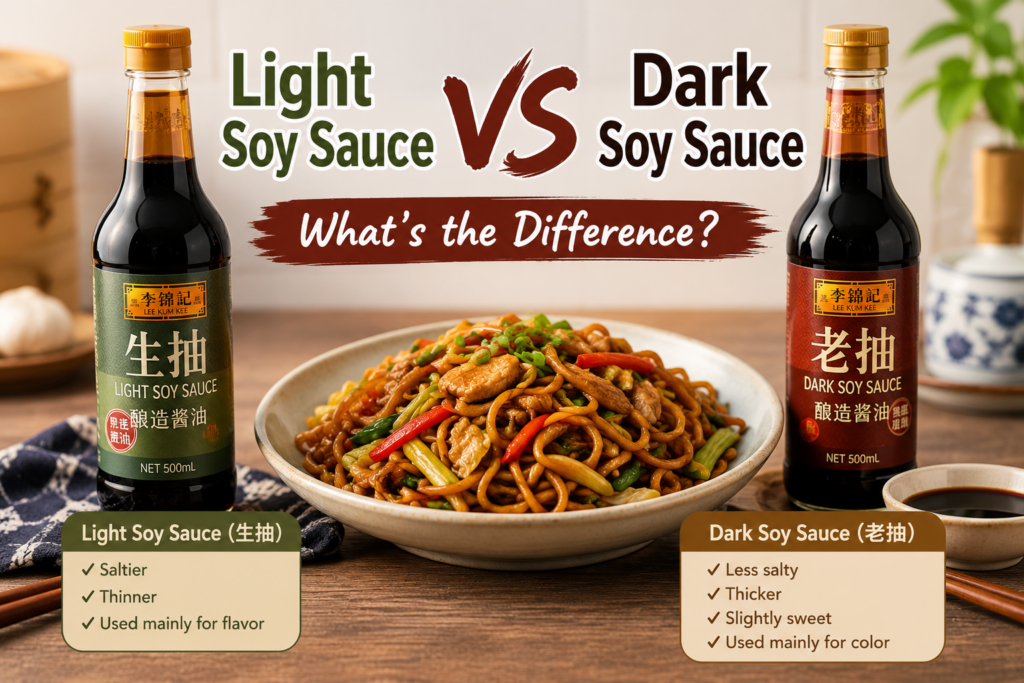
If you’ve started exploring Chinese cooking, you’ve probably come across two ingredients that often confuse beginners: light soy sauce and dark soy sauce. They may look similar, but they serve very different purposes in Chinese cuisine. Understanding the difference will help you cook more authentic Chinese dishes at home.
Quick Answer
The biggest difference is simple:
Light Soy Sauce (生抽)
- Saltier
- Thinner
- Used mainly for flavor
Dark Soy Sauce (老抽)
- Less salty
- Thicker
- Slightly sweet
- Used mainly for color
Many Chinese recipes use both together.
What Is Light Soy Sauce?
Light soy sauce is the most commonly used soy sauce in Chinese cooking.
Despite the name, it is not lower in sodium or lighter in color than regular soy sauce found in Western supermarkets.
It is made from fermented soybeans and wheat and has a rich, savory umami flavor.
Best Uses
- Stir-fries
- Marinades
- Fried rice
- Dumpling sauces
- Noodle dishes
Example
When making Chicken Fried Rice, light soy sauce provides the classic savory flavor.
What Is Dark Soy Sauce?
Dark soy sauce is aged longer and often contains molasses or caramel.
This gives it:
- A darker color
- A thicker texture
- A slightly sweeter taste
Best Uses
- Braised dishes
- Red-cooked pork
- Beef stews
- Lo mein noodles
Example
When making Chinese Braised Pork Belly (Hong Shao Rou), dark soy sauce creates the deep reddish-brown color.
Side-by-Side Comparison
| Feature | Light Soy Sauce | Dark Soy Sauce |
|---|---|---|
| Chinese Name | 生抽 | 老抽 |
| Flavor | Salty, savory | Mildly sweet |
| Color | Brown | Very dark brown |
| Texture | Thin | Thick |
| Main Purpose | Flavor | Color |
| Used In | Stir-fries, marinades | Braises, stews |
Do You Need Both?
For the best results, yes.
Most Chinese home cooks keep both bottles in the kitchen.
Think of them like this:
Light Soy Sauce = Seasoning
Adds:
- Saltiness
- Umami
- Depth of flavor
Dark Soy Sauce = Appearance
Adds:
- Rich color
- Glossy finish
- Slight sweetness
Together they create the classic look and taste of many Chinese dishes.
What Happens If You Use Only One?
Using Only Light Soy Sauce
Your dish may taste good but look pale.
Example:
- Fried rice ✓
- Stir-fried vegetables ✓
- Braised pork ✗
Using Only Dark Soy Sauce
Your dish may become:
- Too dark
- Slightly sweet
- Less flavorful
The result often doesn’t taste authentic.
Can You Substitute One for the Other?
Not perfectly.
If You Only Have Light Soy Sauce
You can still cook most recipes.
Your food simply won’t have the same color.
If You Only Have Dark Soy Sauce
Use less than the recipe calls for.
A good starting point:
1 teaspoon dark soy sauce
=
2 teaspoons light soy sauce
But the flavor will still be different.
Recommended Brands for Beginners
Many Chinese cooks trust these brands:
Lee Kum Kee
Great availability in North America.
Pearl River Bridge
Popular among home cooks and restaurants.
Haitian
One of the most popular soy sauce brands in China.
How to Store Soy Sauce
After opening:
- Keep bottles tightly sealed
- Store in a cool place
- Refrigeration is recommended but not always required
Always check the label for storage instructions.
Frequently Asked Questions
Is light soy sauce the same as regular soy sauce?
Not exactly.
Most Chinese recipes specifically refer to Chinese light soy sauce, which differs from Japanese soy sauce and some Western soy sauces.
Is dark soy sauce sweeter?
Yes.
Dark soy sauce usually contains added sugar or molasses, making it slightly sweeter than light soy sauce.
Which soy sauce should beginners buy first?
If you can only buy one:
Choose Light Soy Sauce.
It is used in far more recipes and provides the core flavor of Chinese cooking.
Final Thoughts
Understanding the difference between light soy sauce and dark soy sauce is one of the first steps toward mastering Chinese cooking.
Remember:
✅ Light Soy Sauce = Flavor
✅ Dark Soy Sauce = Color
Keeping both in your pantry will help you recreate authentic Chinese dishes with confidence.
The next time a recipe calls for soy sauce, you’ll know exactly which bottle to reach for.